
Miriam Haskell

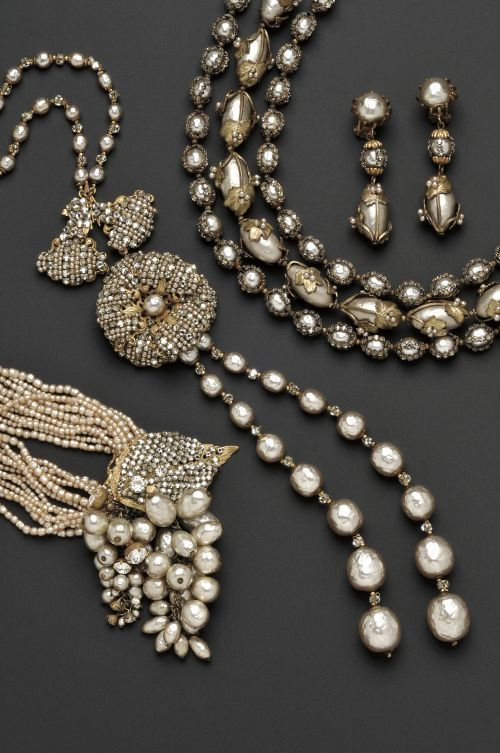
Dear friends, today I want to devote this post to a short story about Miriam Haskell's company. I think many have heard of the classic strings of baroque pearls and fancy bead combinations of all shapes and colours, and easily recognise the authorship of the Haskell brand by their elegant fittings.
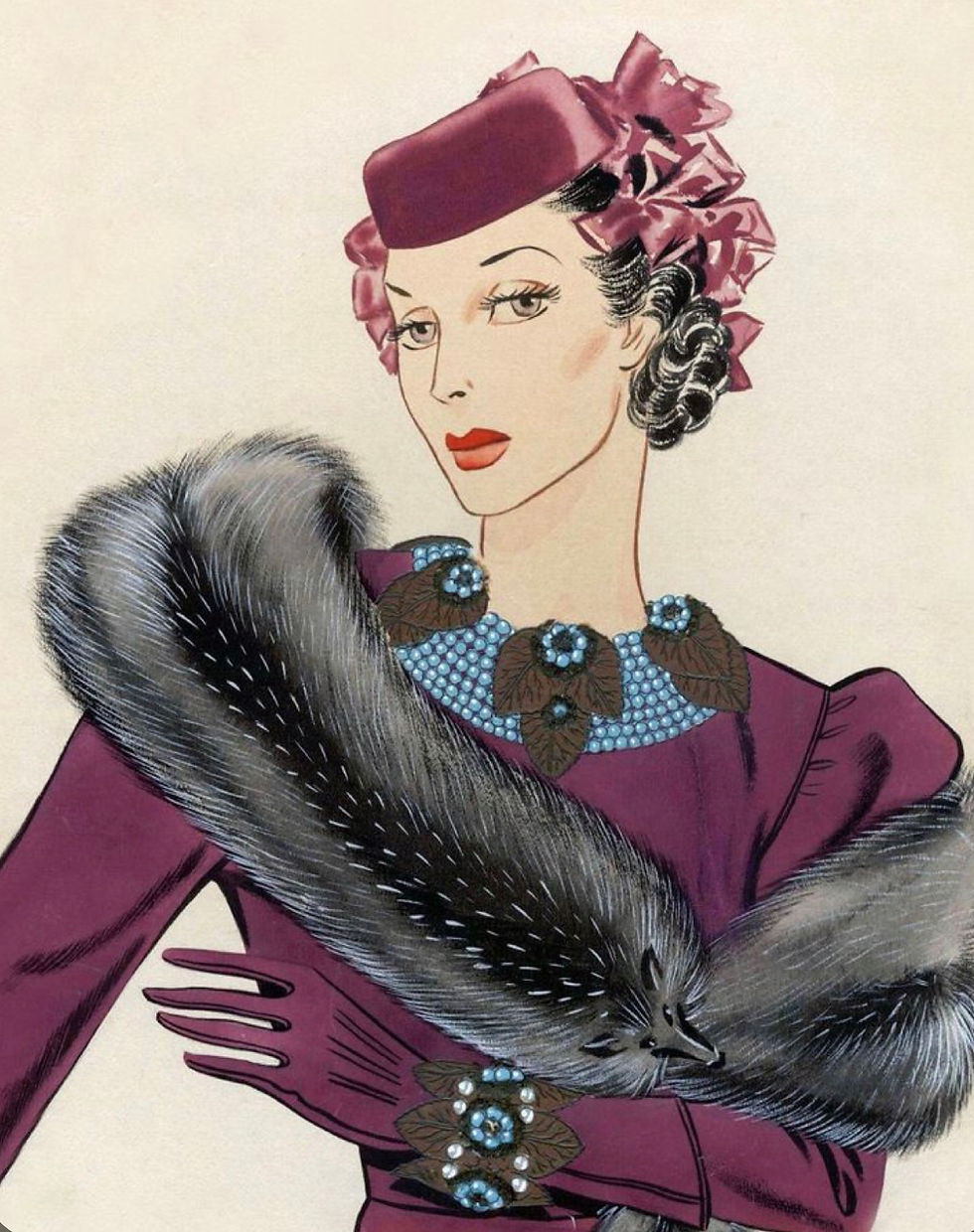
The company launched in the 30s of the twentieth century and for the first ten years did not mark its jewellery. These pieces are also rare, collectible, and need expert identification. The company was founded by Miriam Haskell, but it is not known for certain whether she was the author of at least one design produced under her name. However the famous pearls are the creation of Frank Hess. It was the Hess-Haskell tandem that laid the foundation for a successful business that exists to this day.
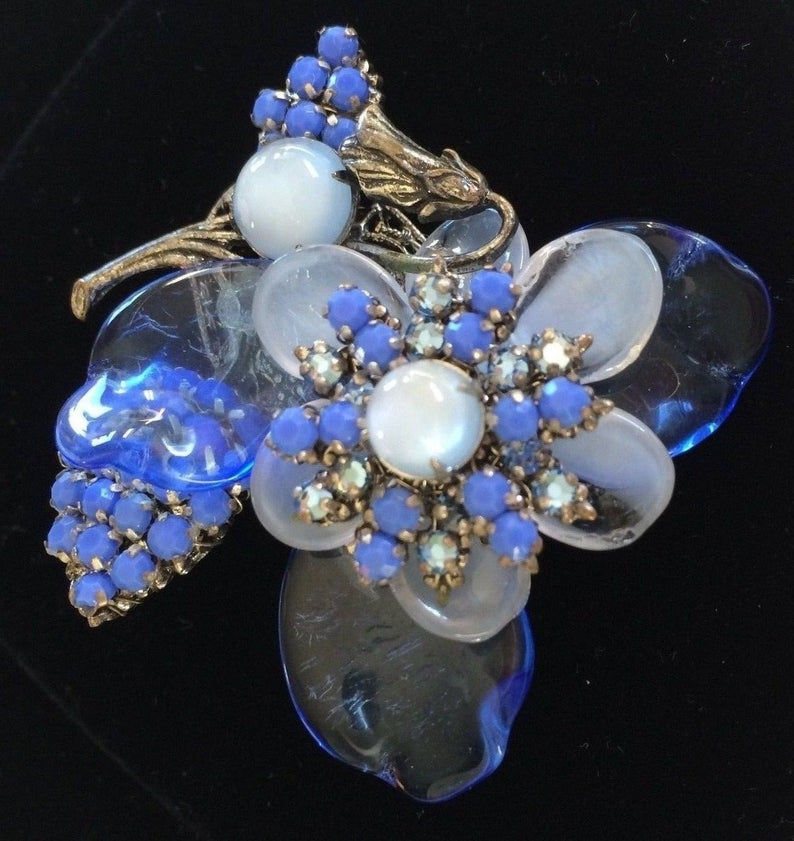
The recognisable Haskell pearls that have become the signature of the brand were imported from Japan. Nikki's company was a small local business when it signed an exclusive contract to supply cultured pearls to the United States. Pearls were made using a complex technology: a glass bead was immersed in a dye from fish scales as many as 7 times. Various tints were added to the white color of mother-of-pearl to give the desired shade - gun-gray, pink, blue or neo-gray, after which the beads were placed on a centrifuge and the paint dried unevenly, giving the beads the appearance of expensive baroque pearls.
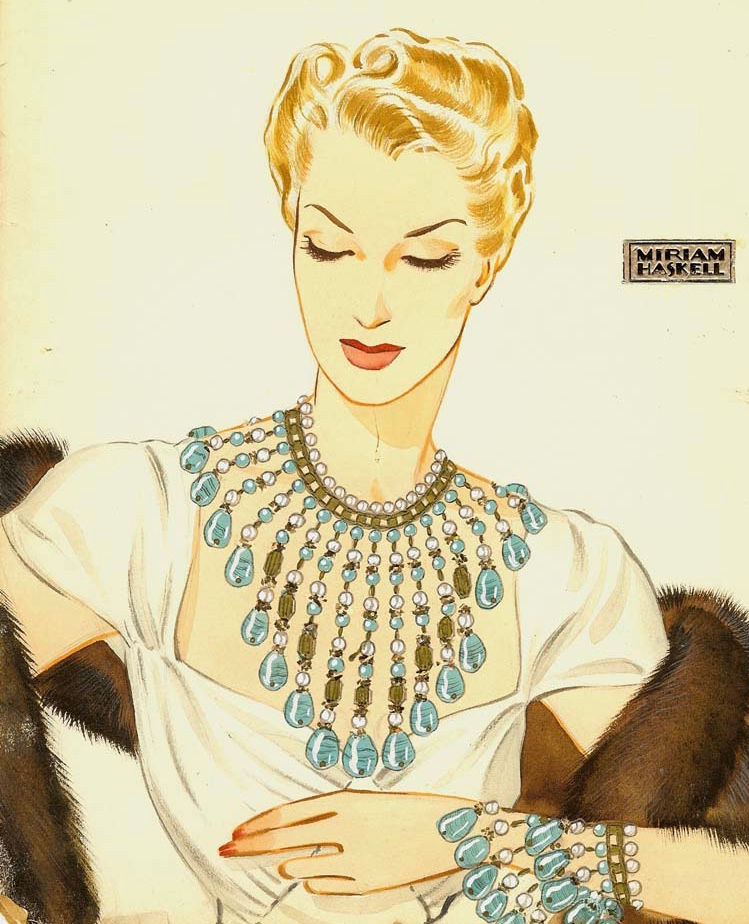
Haskell also produced a series of watercolour posters to advertise jewellery. The posters featured models with cascades of beads in their hair, voluminous bracelets with grape bunches. Sets of several pieces of jewellery were very popular in the 30s and 40s.
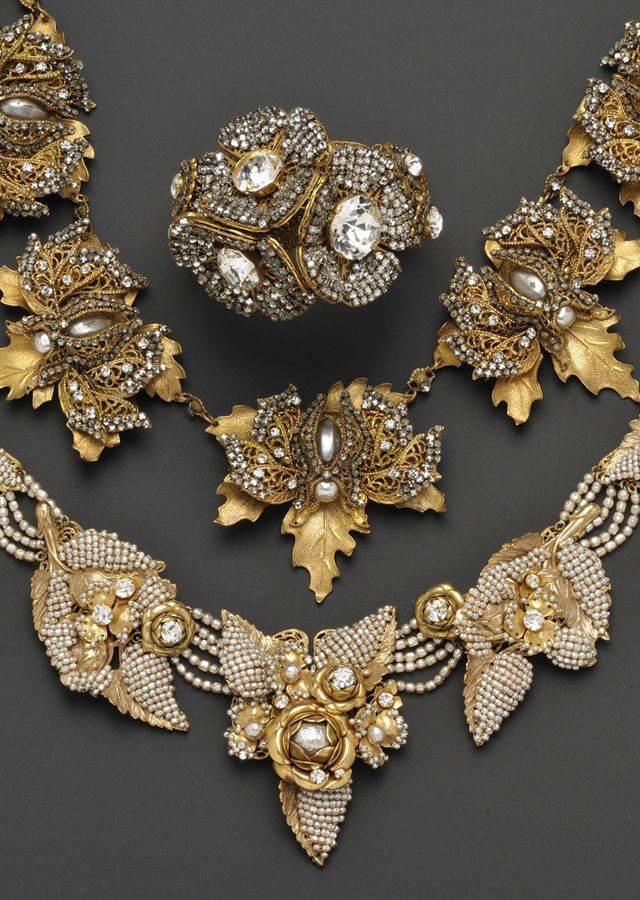
The company produced about 5 collections every year. The main ones were “spring, autumn and new year”, and the minor ones - “summer”, “cruise”.

All decorations were divided into 3 types of difficulty: basic design, complex design and ceremonial multi-layered decorations. The weekend kits are extremely valuable to collectors to this day.
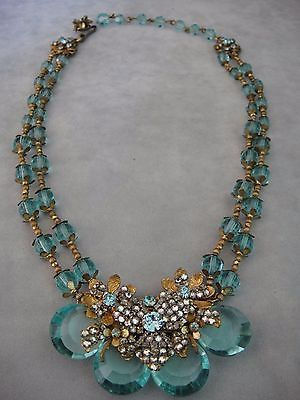
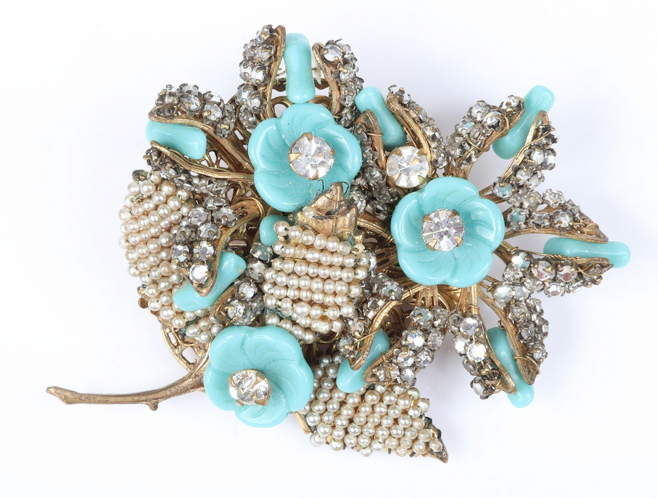
Aside from talented Frank Hess, the company also recruited Lawrence VRBA, who was a breakthrough of these times. At the turn of the 70s and 80s, VRBA brought to the company famous Egyptian motifs, combinations of blue and green glass, sweeping shapes, large catwalk scale. The Egyptian series is very popular and collectible and one of the most recognisable Haskell designs.
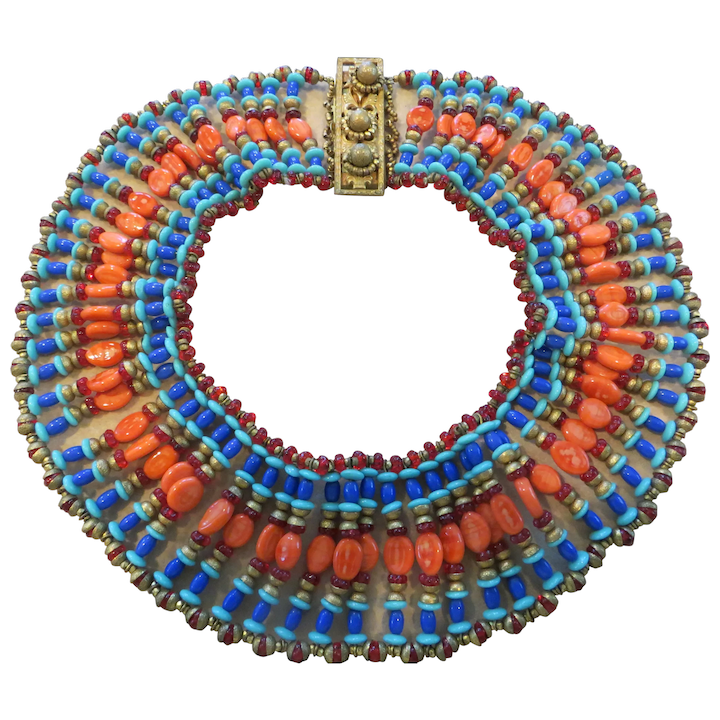
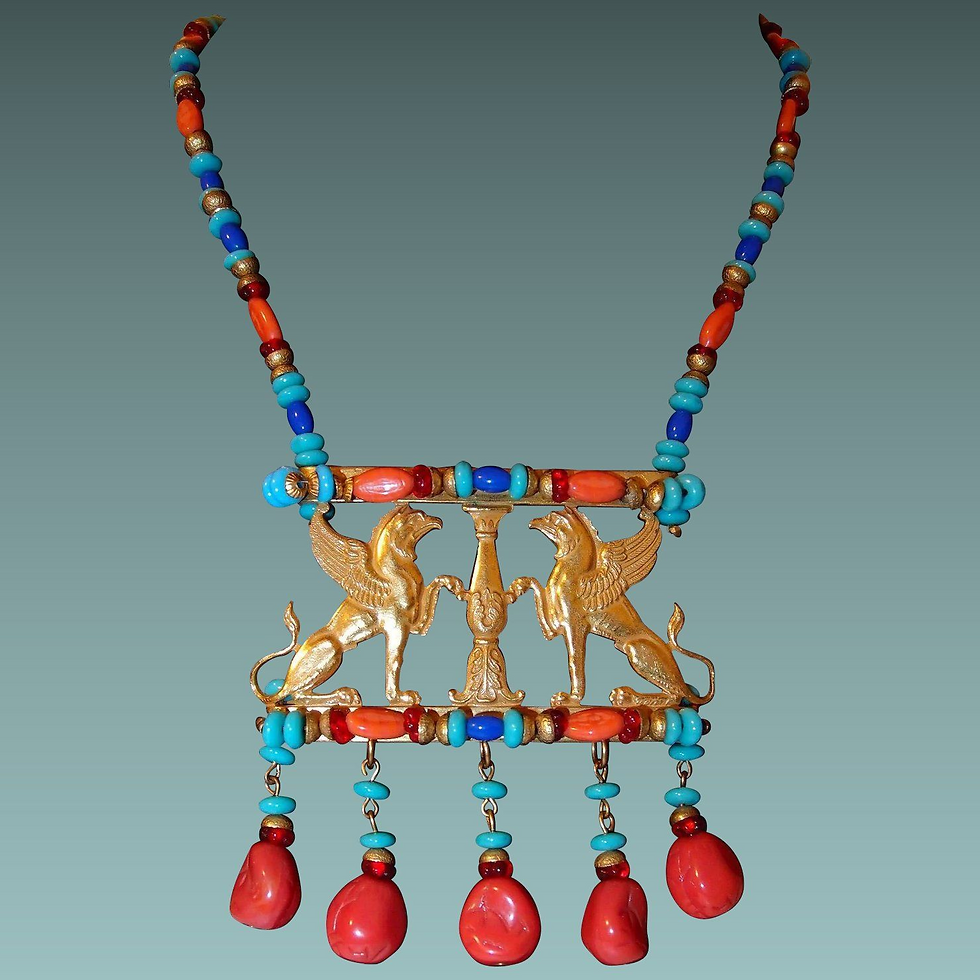
The Egyptian collection has characteristic bead colours. All the accessories were supplied to order, but samples of vintage beads are still kept in the company's archives.
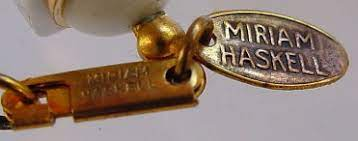
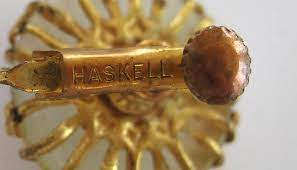
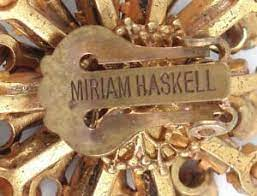
Haskell jewellery might be identified by books and catalogs, color of the metal and beads, and of course the hallmarks that appeared in the post-war years.
1930-1947 jewellery was not marked
1948-1970 jewellery has a hallmark in the form of a horseshoe, or a reverse oval stamp with the inscription Miriam Haskell.
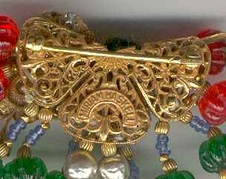
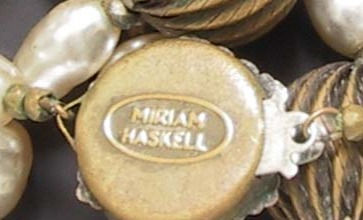
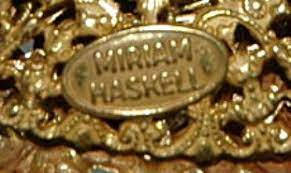
Since the late 1970s the stamp looked like an inscription on an oval cartouche, or was attached to a jewelry piece like an iron tag to the decoration.
Comments